What Is Open Area in a Perforated Sheet?
Open area is one of the most important numbers in perforated sheet design. It describes the percentage of a panel that is open, cut out, or removed by holes.
For example, if a perforated sheet has a 35% open area, roughly 35% of the surface is empty space and 65% remains as material. This percentage affects airflow, strength, weight, light transmission, acoustic behavior, and visual density.

Why Open Area Matters
Open area is not just a visual metric. It directly affects how a perforated panel performs.
For ventilation panels, a higher open area usually allows more air to pass through. For speaker grilles, it can affect acoustic transparency. For decorative screens, it changes how dense or transparent the pattern appears. For sheet metal parts, it influences strength, stiffness, weight, and fabrication risk.
Because of this, open area is often one of the first values designers check when comparing different perforation patterns.
Open Area and Airflow
In ventilation and cooling applications, open area helps estimate how freely air can move through a panel. A low open area may restrict airflow. A high open area can improve airflow, but it may also weaken the sheet.
This is why fan covers, electronics vents, HVAC panels, and enclosure openings often need a balance between airflow and protection. The panel must let air through while still protecting internal components and keeping enough structure around the holes.
Open Area and Strength
Every hole removes material. As open area increases, less material remains to carry load, resist bending, or survive handling.
The remaining material between holes is often called the bridge or web. If the bridge width is too small, the panel can become fragile, distort during cutting, or fail fabrication checks.
High open area can be useful, but it should always be checked together with bridge width and material thickness.
Hole Size, Spacing, and Bridge Width
Open area is mainly controlled by:
- Hole size
- Hole spacing
- Hole shape
- Pattern layout
- Boundary trimming
Larger holes increase open area. Smaller spacing also increases open area because more holes fit into the same panel. But both changes reduce the bridge width between holes.
This relationship is the key design tradeoff: more openness usually means less material.
Visual Density
Open area also changes how a perforated sheet looks. A low open area can feel solid and heavy. A high open area can feel lighter, more transparent, and more technical.
Decorative screens, architectural panels, speaker grilles, and product covers often use open area as a visual design control. Even when airflow is not the main goal, the percentage of open space changes the character of the panel.
Weight Reduction
Perforation removes material, so a higher open area can reduce weight. This can be useful for panels, covers, guards, and prototypes where weight matters.
However, weight reduction should not be considered alone. A very open panel may lose stiffness or become harder to fabricate cleanly. Designers should compare open area with the intended material, thickness, mounting points, and expected loads.
How to Estimate Open Area
For simple repeating patterns, open area can be calculated with formulas. But formulas become harder when using custom shapes, mixed layouts, trimming, gradients, or non-rectangular boundaries.
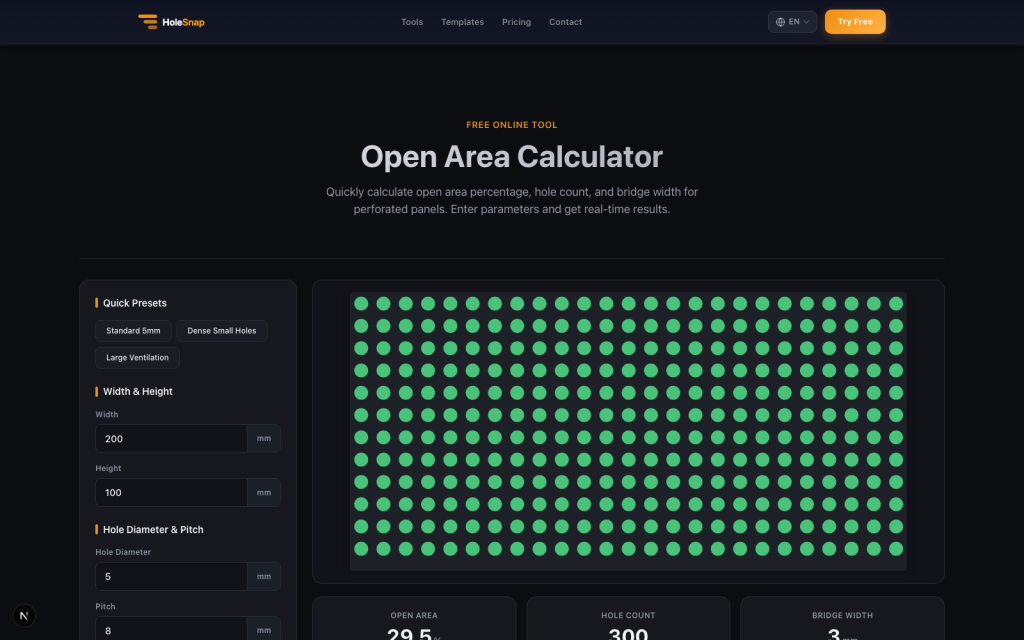
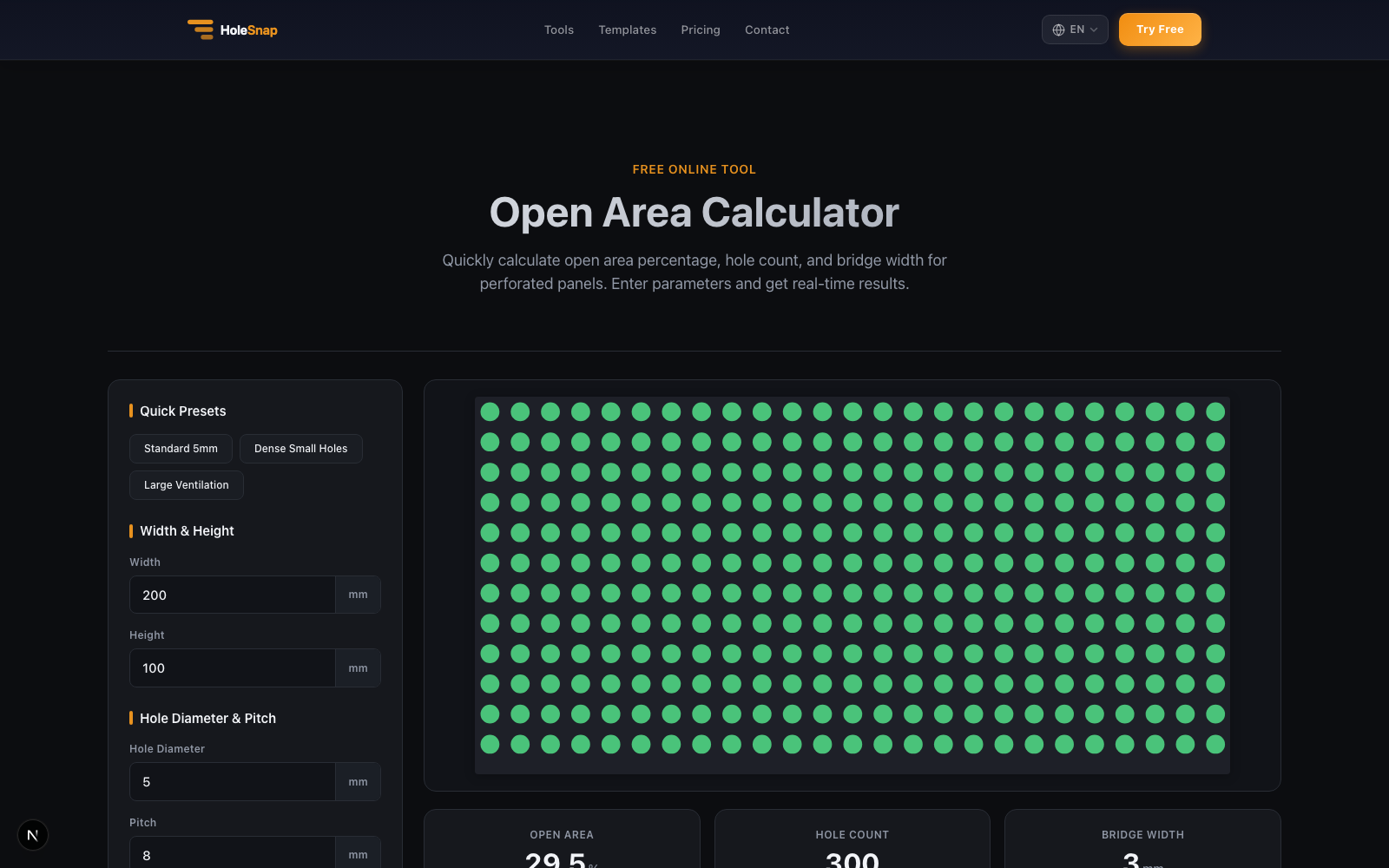
An online open area calculator is useful for testing different values quickly. You can adjust hole diameter, spacing, layout, and panel dimensions, then compare the result before committing to a DXF or CAD file.
Practical Design Tips
Start with a target open area range, not a single fixed number. Then adjust hole size and spacing until the panel meets both visual and functional goals.
For fabrication, check:
- Minimum bridge width
- Edge distance
- Material thickness
- Hole count
- Cutting process limitations
- File size and toolpath complexity
If a pattern looks good but the bridge width is too small, reduce the hole size or increase spacing.
Final Thoughts
Open area is a simple percentage, but it connects many design decisions. It affects airflow, strength, weight, light transmission, and the visual density of a perforated sheet.
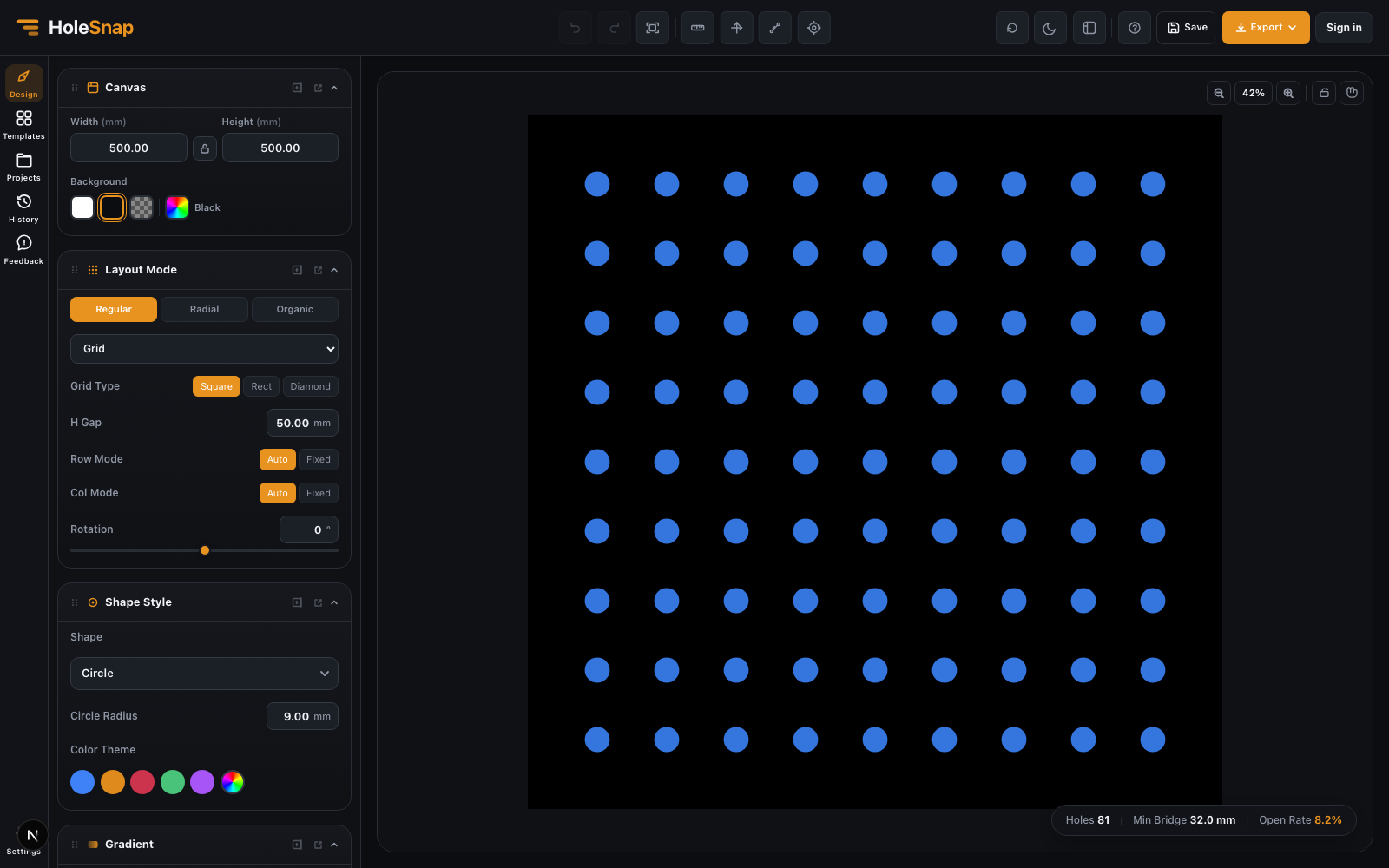
When designing a perforated panel, do not judge the pattern by appearance alone. Check open area, hole spacing, and bridge width together. An online calculator or pattern editor can help you test these values quickly before exporting a file for fabrication.