Honeycomb Perforated Panel: Why Hexagon Patterns Are Popular

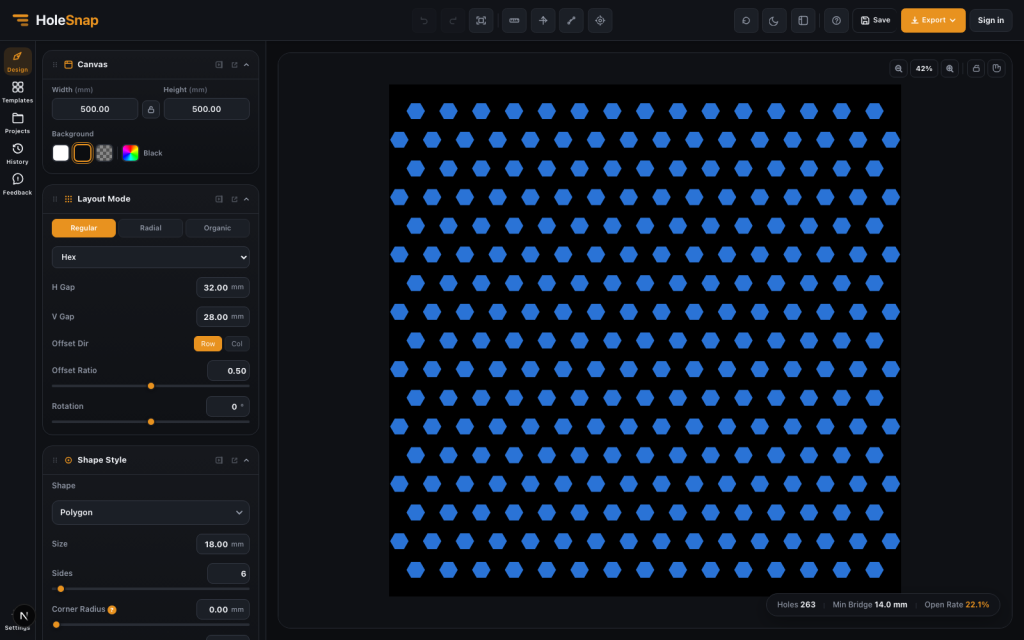
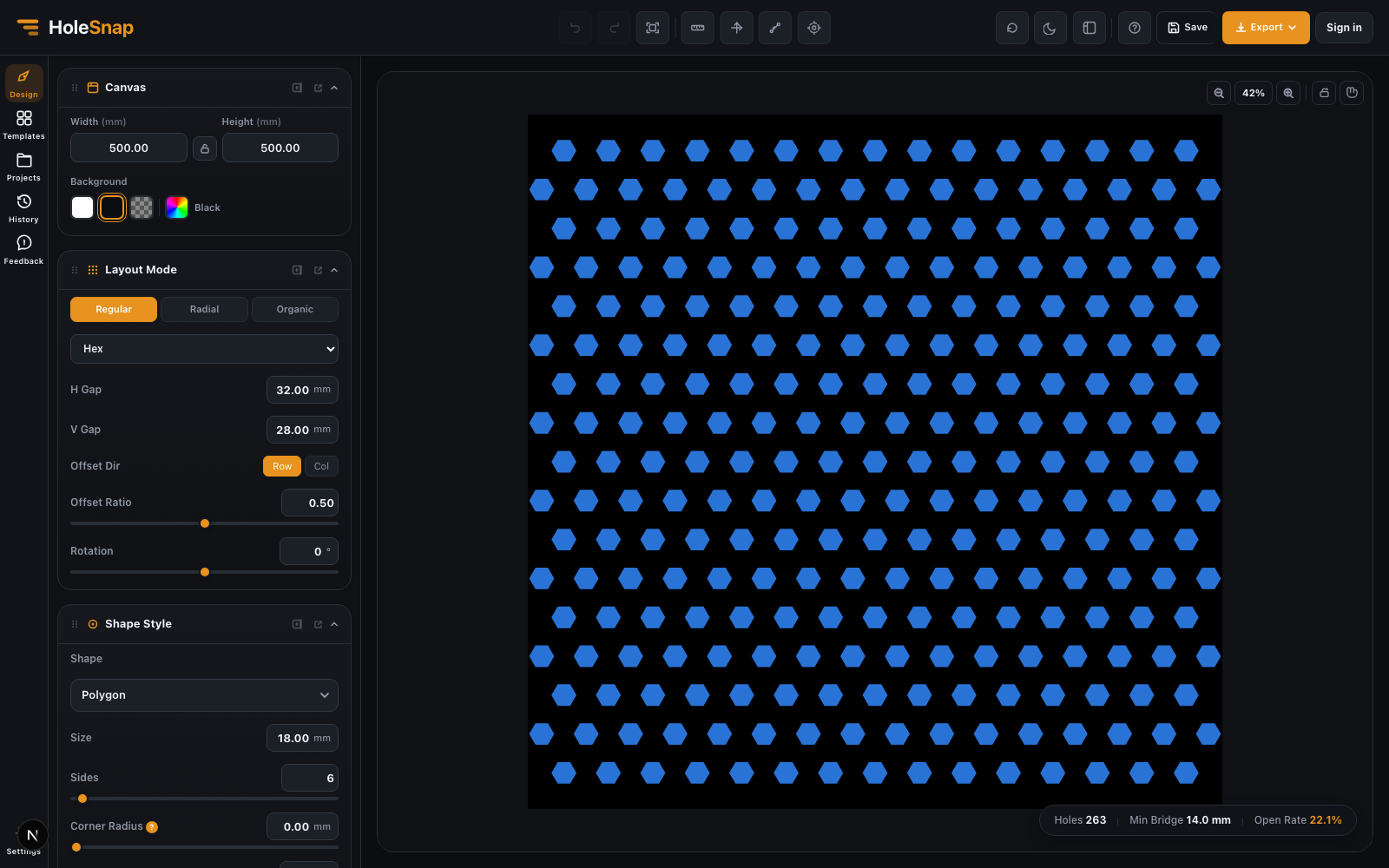
Honeycomb and hexagon patterns are some of the most recognizable perforated panel designs. They appear in maker projects, electronics enclosures, ventilation panels, speaker grilles, industrial products, architectural screens, and decorative sheet metal.

The popularity is easy to understand. Hexagon patterns look technical and organized, can create strong visual density, and often balance open area with remaining material in a visually efficient way.

The Visual Appeal of Hexagons

Hexagons feel structured without looking too rigid. Compared with a square grid, a honeycomb pattern has more movement and visual depth. It can make a flat panel feel lighter, more engineered, and more intentional.

This is why hexagon perforations are common in product design. They work well on enclosure vents, speaker covers, fan guards, computer cases, decorative panels, and prototype parts.

Airflow Potential

Honeycomb patterns are often used where airflow matters. The repeated geometry can create a dense field of openings while keeping a consistent rhythm across the panel.

Open area still depends on the actual hole size, spacing, and bridge width. A honeycomb pattern does not automatically guarantee better airflow, but it gives designers a useful structure for testing high-density perforation layouts.

If airflow is important, compare several versions:

  • Smaller hexagons with tighter spacing
  • Larger hexagons with wider bridges
  • Round holes in a hex-style layout
  • Mixed patterns with boundaries or gradients

Then check open area and minimum bridge width before exporting.

Lightweight Structure

Perforation removes material and can reduce weight. Hexagon patterns are popular partly because they suggest a lightweight structure while keeping a repeated visual order.

In actual fabrication, strength depends on material, thickness, bridge width, hole size, and edge distance. A honeycomb panel can still become weak if the bridges are too thin. Designers should treat the pattern as a starting point, then verify manufacturability.

Design Flexibility

Hexagon patterns can be used in several ways.

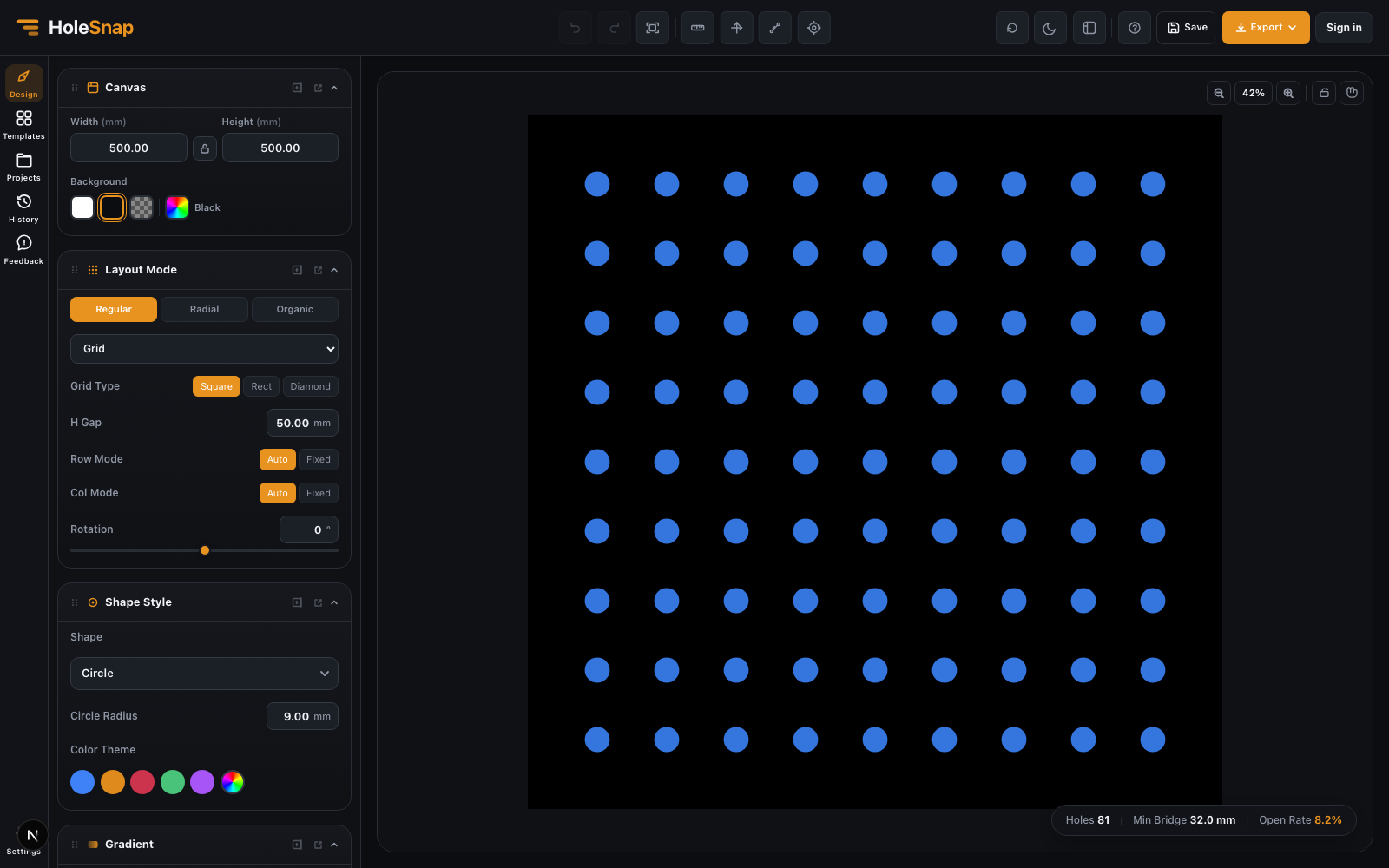
You can use hexagon-shaped holes. You can also use round holes arranged in a hex-style layout. Both can create a honeycomb-like visual rhythm, but they behave differently in fabrication.

Hexagon holes create a sharper geometric look. Round holes in a hex layout are often easier to fabricate and inspect. For laser cutting or CNC routing, the right choice depends on the final appearance, material, and tool limitations.

Boundaries and Panels

Honeycomb patterns work well inside different boundary shapes:

  • Rectangular panels
  • Circular fan covers
  • Rounded rectangles
  • Custom imported outlines
  • Partial decorative regions

When a pattern reaches the edge of a boundary, decide whether partial holes are acceptable. Trim mode can cut holes at the edge. Hide mode keeps only complete holes inside the boundary.

Exporting Honeycomb Patterns

Once the pattern is ready, export it in the format your workflow needs.

  • SVG is useful for vector editing and visual review.
  • DXF is common for laser cutting, CNC, waterjet, and CAD/CAM workflows.
  • STP/STEP is useful when the pattern needs to move into a 3D CAD assembly.

Before fabrication, check scale, units, open area, bridge width, and edge behavior.

Practical Tips

If you are designing a honeycomb perforated panel for the first time, start with moderate spacing and a simple rectangular panel. Avoid making bridges too thin early in the process.

Check the pattern at full panel scale, not only zoomed in. A honeycomb pattern can look clean in detail but become visually too dense across a large surface.

If the panel is functional, test open area. If the panel is decorative, test visual density and edge alignment. If the panel is structural, check bridge width and material thickness carefully.

Final Thoughts

Honeycomb perforated panels are popular because they combine visual appeal, airflow potential, lightweight character, and design flexibility. They work well for both functional and decorative projects.

The best honeycomb pattern is not just the most open or the most detailed. It is the one that balances appearance, fabrication limits, and the real job the panel needs to do.

Share:

More Posts